⚡KEY TAKEAWAYS
- Hidden tech spend is costly — 20–30% of IT budgets are wasted on ghost assets, unused licences, and forgotten subscriptions.
- ITAM gives full visibility — It tracks hardware, software, and cloud subscriptions across their entire lifecycle, covering cost, compliance, and security.
- Software waste is rampant — Up to 40% of software spend goes to licences nobody uses, often from uncancelled or duplicated tools.
- Real business benefits — ITAM cuts IT costs, reduces security risks, supports PDPA compliance, and simplifies employee onboarding/offboarding.
- Connect ITAM to your HRMS — Linking assets to employee records prevents devices and licences from going missing when staff join or leave.
- No enterprise tools needed — SMEs should look for cloud-based, HR-integrated solutions that any manager can use without IT expertise.
- Start with a simple audit — List all devices and subscriptions, assign ownership, and review quarterly. This alone can surface immediate savings.
You’ve bought the laptops, subscribed to the software, and handed out phones to the team. But right now, can you say exactly how many devices your business owns, who has them, and which software licences are actually being used?
For most SMEs and start-ups in Malaysia, the honest answer is no — and that gap is costing real money. Research shows that 20–30% of IT budgets are wasted on unused or untracked assets. For a lean team with tight margins, that’s capital that should be funding growth instead of evaporating into ghost assets and forgotten subscriptions.
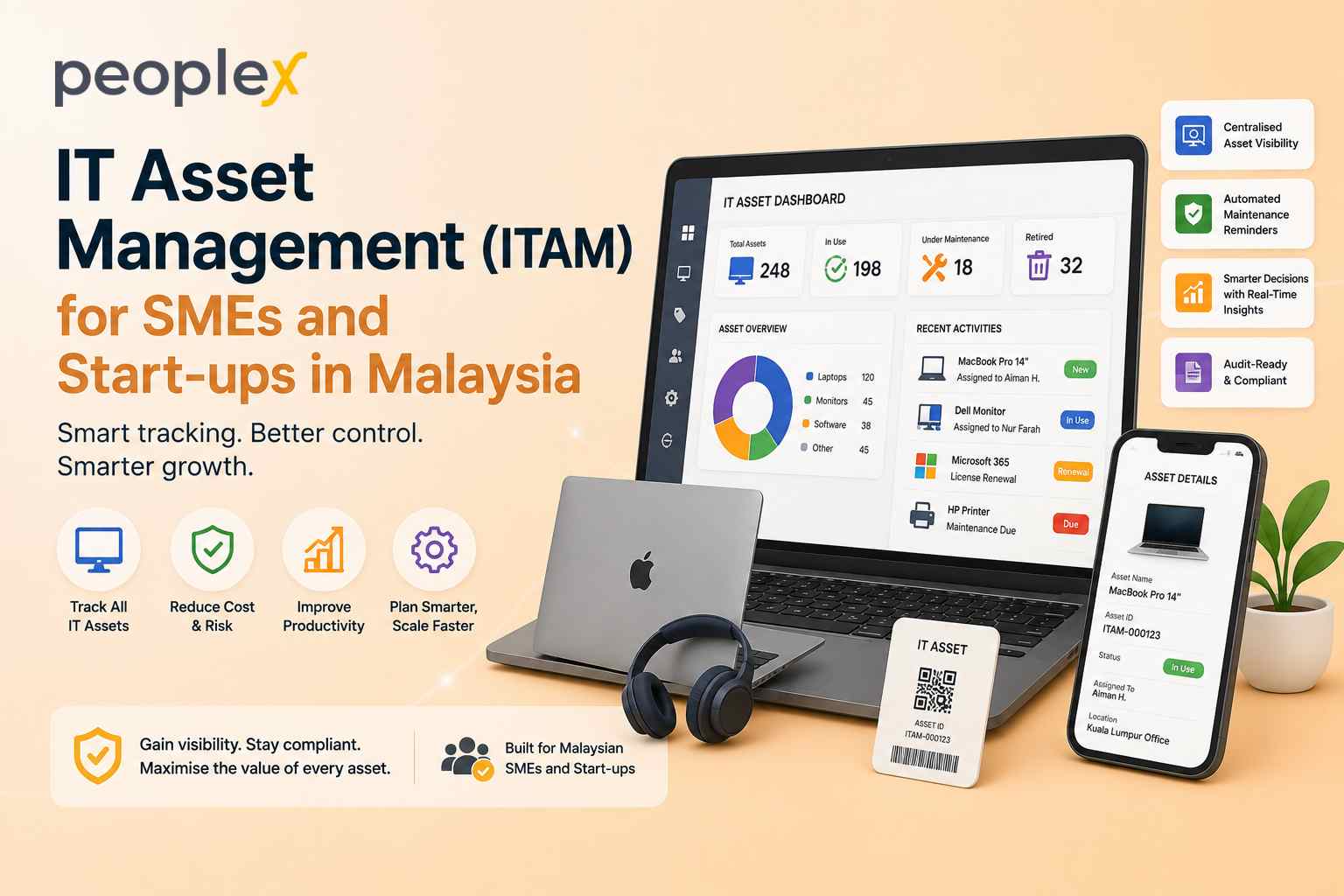
IT asset management (ITAM) is the system that closes this gap. It gives you full visibility into everything your business owns — hardware, software, licences, and devices — so you always know what you have, where it is, and what it costs. This guide breaks down what ITAM is, why it matters for Malaysian SMEs and start-ups, and how to put it in place without a dedicated IT department.
What Is IT Asset Management — and Why SMEs Can’t Afford to Skip It?
IT asset management is the practice of tracking, managing, and optimising all technology assets your business owns across their full lifecycle — from the day a device is purchased to the day it’s retired, sold, or written off.
ITAM covers three broad categories: hardware, software, and cloud subscriptions. All three carry cost, risk, and compliance implications that grow more complex as your team grows.
What Counts as an IT Asset?
An IT asset is any technology resource your business owns or licences. This includes:
- Physical hardware — laptops, mobile phones, tablets, monitors, and printers
- Software licences and SaaS subscriptions
- Cloud storage accounts and productivity tool seats
- Any tech resource with a cost, a user, and a renewal date
How Is IT Asset Management Different from General Asset Management?
General asset management covers all company property. IT asset management focuses specifically on technology resources, with extra complexity:
- ITAM has specific objectives around IT cost control and licence compliance that general asset management doesn’t address
- Software licences expire and require active tracking to avoid overpaying or under-licensing
- Untracked hardware creates security vulnerabilities as devices go unpatched
- ITAM also covers efficient IT service delivery — ensuring the right tools reach the right people
What Is Poor IT Asset Management Costing Your Growing Business?
Before investing in a solution, it helps to understand where the losses are happening. For most SMEs and start-ups, they fall into two categories.
Ghost Assets: Paying for Equipment That’s Lost, Broken, or Gone
A ghost asset is equipment that still appears in your records but no longer exists. Your business may still be:
- Insuring devices that have been lost or stolen
- Depreciating hardware that was written off months ago
- Budgeting around assets that nobody has seen in a year
Without a proper IT asset management system, ghost assets accumulate silently and distort your financial picture.
Software Licence Waste — Are You Overpaying for Tools No One Uses?
Studies from itemit show that 20–40% of software spend goes to licences nobody uses. Common culprits include:
- Subscriptions signed up for during a project that never got cancelled
- Tools left active after a team member’s role changed or they left
- Duplicate tools across departments doing the same job
What Are the Key Benefits of IT Asset Management for SMEs and Start-ups?
IT asset management is not just about tidying up records. The business impact is measurable.
Cut IT Costs Without Slowing Growth
ITAM gives you the data to make smarter purchasing decisions:
- See exactly what’s available and underutilised before buying new devices — ITAM can reduce software spend by reallocating licences before renewing
- Identify redundant subscriptions across departments and consolidate them
- Plan hardware refresh cycles based on real usage data, not guesswork
Stay Compliant and Secure as Your Headcount Grows
Unmanaged devices create compliance and security risk. ITAM helps you:
- Track every device to ensure security patches and updates are applied
- Manage licence compliance to avoid fines from software audits
- Meet PDPA obligations by knowing exactly which devices hold company or customer data
Manage Assets Smoothly When Staff Join or Leave
Proper asset lifecycle management is one of the biggest wins for growing businesses:
- Provision the right devices and software for new hires from day one
- Recover all assets and revoke software access when employees leave
- Eliminate the expensive scramble of tracking down equipment during offboarding
How IT Asset Management Connects to Your HRMS
The most effective way to manage IT assets in a growing business is to connect ITAM directly to your HR system. When asset records sit in a separate spreadsheet from your employee records, things fall through the cracks.
Linking Every Device and Software Licence to an Employee Record
An HRMS with built-in asset management — like PeopleX’s HR technology platform — gives you:
- A single view of every asset assigned to each employee
- A clear owner for every device and software seat in your business
- Real-time status updates when assets are returned, reassigned, or written off
Automating Asset Allocation at Onboarding — No More Manual Handoffs
When a new hire joins, asset allocation should be part of the same workflow as their contract and payroll setup. With modern HR system software, this means:
- Manager submits asset request through the HRMS
- Approval is routed and captured automatically
- Asset is assigned to the employee’s profile before their first day
- No separate spreadsheet, email chain, or manual follow-up required
Recovering Assets at Offboarding Before They Disappear
The most critical ITAM moment is when an employee leaves. An HRMS-integrated system triggers:
- Asset return checklist as part of the offboarding workflow
- Automatic deactivation of software licences tied to the departing employee
- Financial records updated automatically — pair this with AI-powered expense tracking to keep accounts accurate when assets are written off
What Should SMEs Look for in IT Asset Management Software?
Not every ITAM solution is built for lean teams. Here’s what to prioritise.
1. Cloud-Based, No IT Department Required
For SMEs and start-ups without a dedicated IT team, look for:
- Cloud-based access so your team can manage assets from anywhere
- A simple interface any manager can use without specialist training
- No local infrastructure to set up or maintain
2. Integrates with Your HR and Payroll System
Standalone ITAM tools create data silos. The most efficient setup:
- Links asset records directly to employee profiles in your HRMS
- Connects asset assignment with payroll outsourcing in Malaysia and HR workflows in one platform
- Eliminates double-entry and ensures nothing gets missed at employee lifecycle transitions
3. Approval Workflows and Audit Trails for Accountability
As your team grows, governance matters. Look for:
- Manager sign-off required before assets are allocated or renewed
- Internal notes captured for each approval or rejection
- Audit-ready reports for insurance, compliance, or financial review
Getting Started with IT Asset Management in Malaysia
A Simple First Step for SMEs With No Formal ITAM Process
Start with a full inventory audit:
- List every device your business owns — laptops, phones, monitors, accessories
- List every software subscription and SaaS tool, with the number of seats
- Document who each asset is assigned to and its current status
- Set a review date — quarterly works well for most SMEs
Audit is recommended as a recurring process, not a one-time exercise. It often surfaces immediate cost savings before you’ve implemented any software.
How PeopleX Makes IT Asset Management Accessible for Lean Teams
PeopleX’s asset management feature is built for Malaysian SMEs and start-ups who need a practical system without enterprise complexity:
- Distribute, track, and recover company assets from one cloud-based platform
- Real-time visibility into every device and who it’s assigned to
- Approval workflows and internal notes built in for accountability
- Fully connected to your HR processes — asset management becomes part of onboarding and offboarding, not a separate task
Stop the Hidden Tech Spend — Start Managing IT Assets the Right Way
For Malaysian SMEs and start-ups, IT asset management isn’t a nice-to-have — it’s a straightforward way to stop money leaking out of your business through ghost assets, unused licences, and unrecovered devices.
The businesses that get this right early grow with cleaner finances, fewer compliance headaches, and better visibility into their tech spend. You don’t need a big IT department or a complex system to start. You just need the right platform.
Explore PeopleX’s Asset Management feature and see how easy it is to track, assign, and recover company assets — all in one place. Connect with us now!